
Best Postpartum Books for Couples (Recommended by a Couples Therapist)
Best postpartum books for couples include And Baby Makes Three by the Gottmans, How Not to Hate Your Husband After Kids by Jancee Dunn, Fair Play by Eve Rodsky, Baby Bomb by Hoppe and Tatkin, Becoming Us by Elly Taylor, To Have and to Hold by Jessica Zucker, and Happy With Baby by Suzanne O'Brien. Around two-thirds of couples report a drop in relationship satisfaction in the first postpartum year. These books address the most common sources of that rupture: resentment, invisible labor, identity loss and disconnection.
When a new-parent couple first sits down with me, they list what they're fighting about.
The night feeds and diaper changes.
The fact that they haven't had sex since the second trimester.
The real fight hides underneath all of it: I am drowning and I can't tell if you can see me. Under every logistics argument sits a question each partner is too depleted to ask. Am I still a person to you, or just the other half of the staffing schedule?
By this point many couples tell me we only talk about the baby now. I wrote about that exact shift in what happens when new parents only talk about the baby.If that sounds like your house right now, here's the first thing I tell couples and it's the thing that lets them exhale.
You're not expected to fix years of distance in one conversation. You're only looking for the next honest one.
These are the seven books I recommend most to new parents and couples in transition. I've arranged them by where the rupture lives, because in my experience the book that helps, is the one that meets you where your particular tear is.
How Not to Hate Your Husband After Kids: For hardened resentment
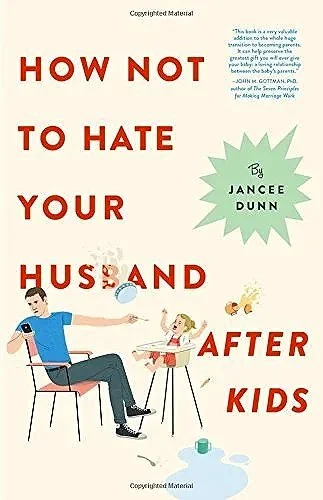
I typically recommend this to the partner who has started keeping score in her head, who hears him offer to "help" and feels the rage spike before he's finished the sentence. The resentment has stopped being a reaction and become the lens she sees him through. Dunn knows that feeling from the inside, and she chases it down like the reporter she is, consulting couples therapists and even an FBI hostage negotiator on how to defuse a fight already in progress. I recommend it for postpartum couples specifically because the first year is when the labor imbalance is steepest and most invisible, feeding a resentment that hardens fast when nobody names it out loud. What the book does best is treat her anger as evidence worth reading, the only door resentment ever opens through, and walk her back from "he never does anything" to the quieter thing underneath it: I am doing this alone and I am terrified this is just my life now.
No time to read it: the title alone is the reframe. Start there.
2. Baby Bomb: For Couples Who Repair Like Opponents
This book is for the couple whose apologies sound like settlements. One says sorry and the other counts it against the tab they're still owed, so every repair becomes a negotiation over who was more wronged. Hoppe and Tatkin built the book on his PACT model, which starts from the body: two people running on no sleep stop hearing each other and start bracing against each other, because a depleted nervous system reads a tired partner as a danger to survive. I recommend it for postpartum couples specifically because the newborn months are when your bodies are most depleted and least able to self-regulate, which is exactly when the bracing starts. The book teaches you to settle each other down first, before a word of the conflict gets touched, so two exhausted people can still land on the same side at 3am.
No time to read it: Tatkin's premise in one line. Before you succeed at parenting, you have to succeed as a couple.
3. Becoming Us: For Couples Who Can't Stop Rehashing the Same Fight
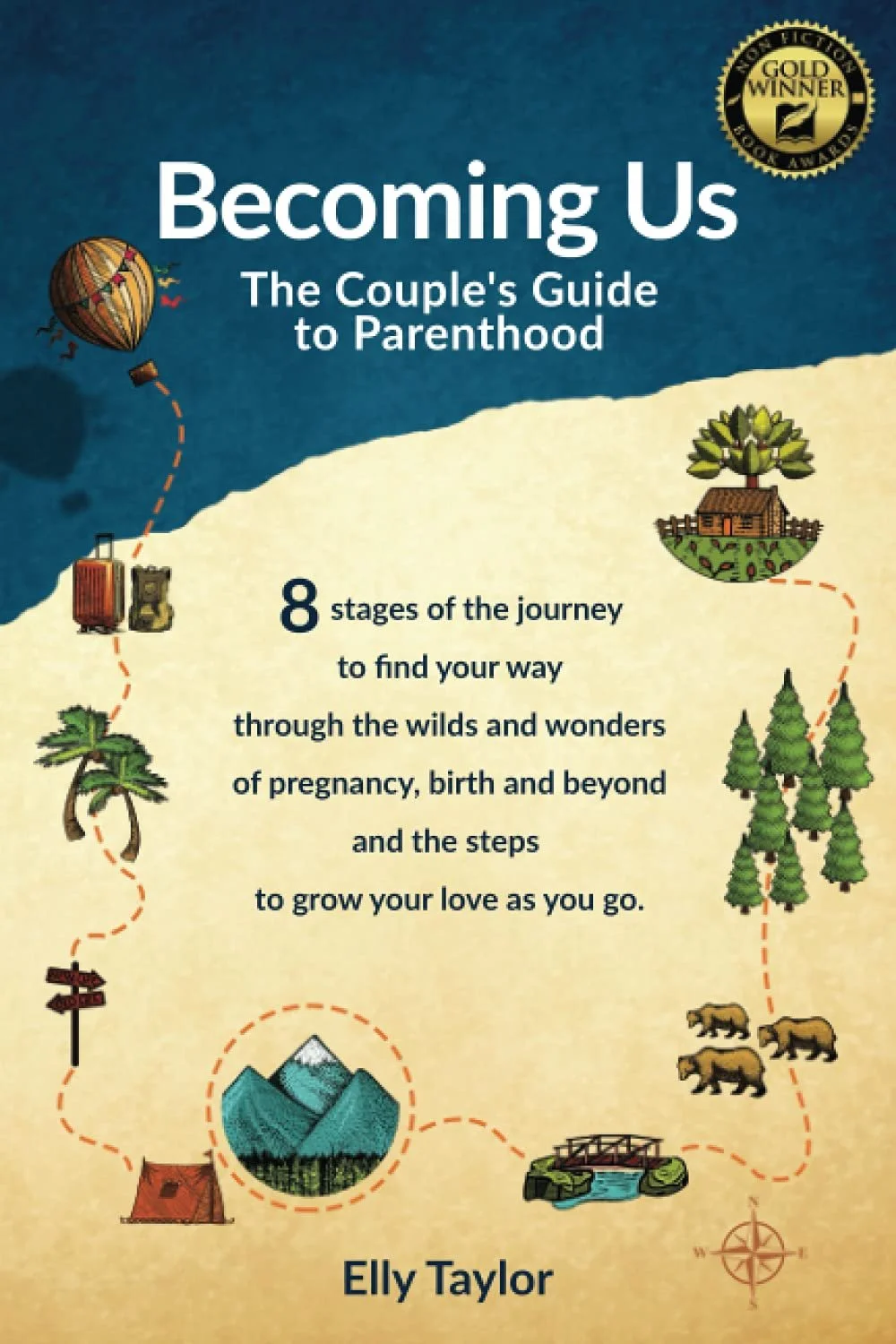
For the couple stuck autopsying every fight, replaying who said what and when it started, certain that if they can just locate the break they can prove whose fault it is. Taylor is an emotionally focused couples therapist, the same approach I'm trained in and she reframes the whole tear as architecture rather than damage.
You are between two versions of yourselves. The gap you keep treating as wreckage is actually the build site.
I recommend it for postpartum couples specifically because the newborn months are the messiest stretch of that rebuild, when you've left who you were as a pair but haven't yet become who you're turning into as a family. The book gives you a map for the in-between, so you stop reading the disorientation as a verdict and intead start reading it as construction.
No time to read it: the frame to hold. You're both becoming a new thing with new identities.
4. To Have and to Hold: For the Mother Who Feels Like a Monster for Missing Her Old Life
This book is for the mother who can't hold "I love this baby" and "I miss my whole life" in the same hand without feeling like a monster for the second one. Her rupture inside her her leaks into the relationship and marriage as distance she can't explain.
Sometimes that internal strain feeds something heavier, which I wrote about in how your relationship can deepen postpartum depression. Millwood is a clinical psychologist and she writes about that internal split with enough precision that women stop feeling crazy and start feeling understood.
This book is for postpartum couples specifically because so many times what looks like a couple problem in the first year is one partner quietly coming apart inside and the repair has to start there before anything between them can hold.
One honest note: it's written through a heterosexual lens and asks a lot of the mother specifically, so I recommend it for how deeply it sees her experience and not as a balanced map of the partnership.
No time to read it: the permission it grants. Grieving your old life is not a betrayal of your baby.
For a deeper look at what that conflict actually looks like between partners, postpartum relationship issues covers the full pattern.
5. Happy With Baby: For When You Keep Meaning to Reconnect and Another Week Passes.
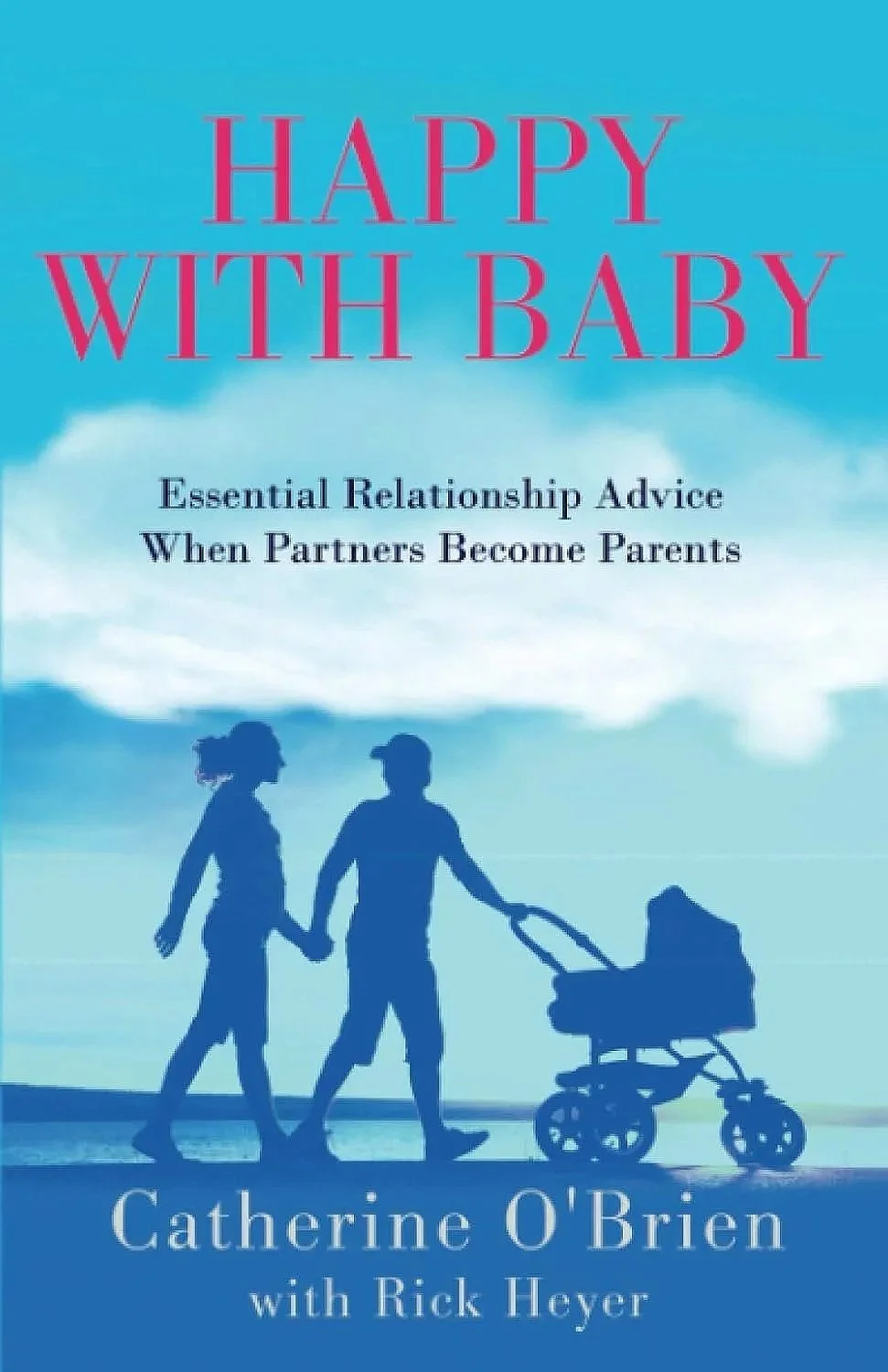
To the partner who keeps saying "we should reconnect" and then waits for the feeling to show up on its own, the way it used to before the baby.
It doesn't show up.
The window closes, another week passes and the distance sets in.
O'Brien is a marriage and family therapist and her whole approach is to make connection a thing you schedule rather than a thing you hope for, with scripts and weekly check-ins you can actually run while exhausted.
It’s postpartum couples specifically because the newborn months erase every bit of spontaneous time you used to reconnect in, so if you don't put it on the calendar it simply never happens.
I believe this is the most practical book on the list, the one you can open tonight and use tomorrow.
No time to read it: the move. Schedule the connection you're waiting to feel.
6. And Baby Makes Three: For Couples Pretending the Math Didn't Change their Relationship
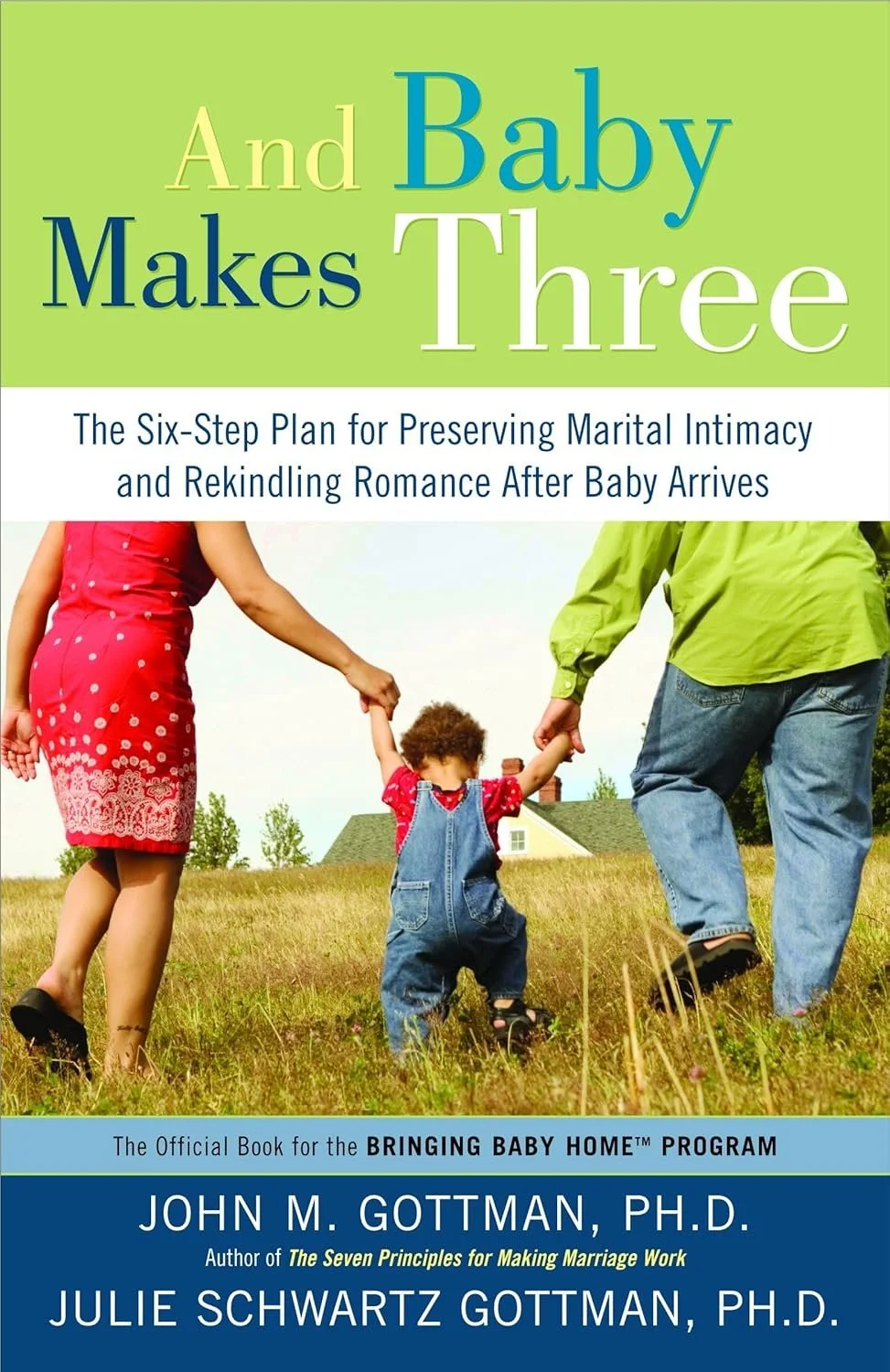
This is for the couple still operating like it's two people splitting a life, when there are three now and the math broke months ago.
They keep expecting the old ratios of time and attention to balance and they don't.
The Gottmans built this on decades of lab research tracking couples through the transition to parenthood-the same research that documented the two-thirds decline in relationship satisfaction.
I typically recommend it first and almost every time, because the research itself is the relief. It tells a couple the strain is normal and predictable and not a sign they chose wrong.
It’s great specifically for postpartum couples because it's the one book built entirely around the transition to parenthood, so every page already speaks to where you are.
No time to read it: the Gottmans' Bringing Baby Home program and talks cover the core ideas.
7. Fair Play: For the Partner Who Says "Just Tell Me What to Do"
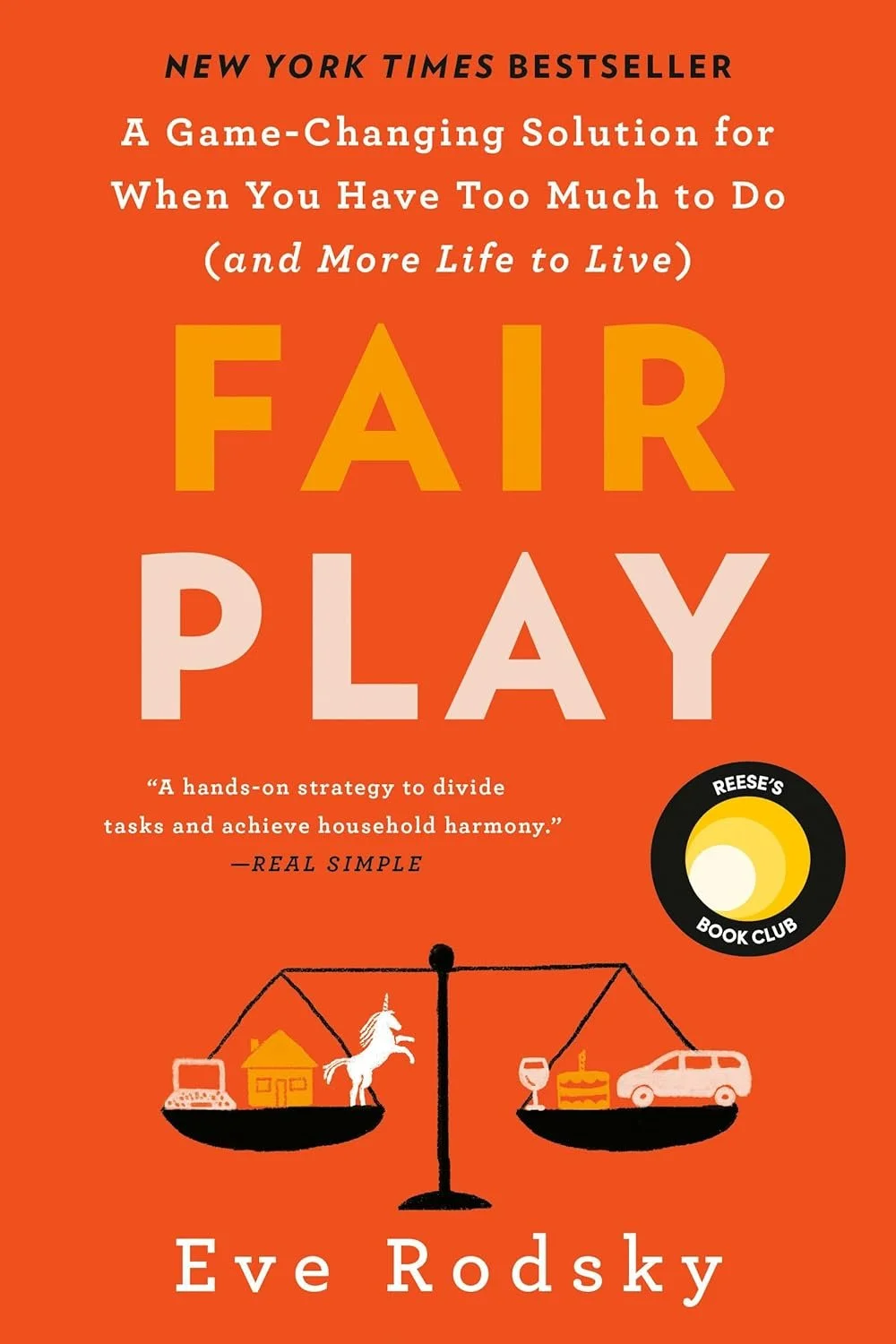
I give this to the couple where one of them genuinely wants to help and keeps asking what to do, while the other has somehow become the household's project manager, the one holding every deadline in their head.
The asking itself has become another thing or task she manages.
Rodsky names the real problem: the invisible work of noticing and remembering that lives in one person's head and never shows up as a task anyone can hand off. She turns that load into something you can both see and divide, with a system and a shared language for it.
A newborn multiplies the invisible work overnight and the partner carrying it usually can't even describe it yet, but she can feel it crushing her. Once it's named and visible, you can finally fight about the actual thing instead of circling it.
No time to read it: the card-deck system and her talks give you the gist fast.
When a Book Isn't Enough and That's Not a Failure
A reading list helps when you're catching the patterns early.
Sometimes the loop has more grip than any book can loosen. The same fight keeps repeating with no shift and one of you goes silent while the other stops being able to feel your hand. If you're trying to tell whether you're past the point a book can help, the signs you might need couples therapy for new parents can help you read where you are.
That's the work couples therapy is built for and it's the work I do with new parents through The Re|Pair Framework helping two people close what tore and become a we again rather than co-managers of a baby. I've helped postpartum couples move from feeling like exhausted co-parents who barely speak beyond logistics to partners who understand each other and feel emotionally connected again. My approach helps couples break the patterns that create resentment and build a relationship that feels supportive through the demands of new parenthood.
This season doesn't have to define your relationship. The right support can help you build habits that strengthen your partnership long after the postpartum months are over.I'm a couples therapist in Minnesota specializing in new parents, relationship transitions, conflict and communication challenges and I see couples virtually across the state through couples therapy for new parents. If your house feels like this right now schedule a complimentary consultation below.
Why Do Couples Fight After Having a Baby? Common Questions
-
Yes, fighting more after a baby is normal and expected. Research shows conflict rises and relationship satisfaction drops for most couples in the first year, with some studies finding up to 69 percent affected. The strain is a documented response to a major shared stressor, and the majority of new parents move through it.
-
Having a baby causes conflict because several pressures land at once. Sleep loss weakens emotional regulation, the mental load lands unevenly on one partner and intimacy changes while both people move through identity shifts. Most arguments about logistics carry a deeper question underneath them: do you still see me in here?
-
Postpartum conflict signals a need for couples therapy when the same fight repeats with no resolution and emotional distance keeps growing. Contempt or stonewalling is another sign the pattern has hardened. You don't need to wait until things feel broken, since getting support while patterns are still forming leads to better outcomes.
-
And Baby Makes Three by the Gottmans is the best starting book for most new parents, because it's built on research about the transition to parenthood and reassures couples the strain is normal. If resentment is the main issue, choose How Not to Hate Your Husband After Kids. For an uneven workload, Fair Play fits best.
-
Yes, couples therapy for new parents works well virtually across Minnesota. Online sessions remove the childcare and travel barriers that make in-person therapy hard with a newborn, so you can meet from home during a nap. At ForwardUs Counseling, I see new-parent couples virtually throughout Minnesota.
